Lifeguard Simulator Beach Patrol Duties
Tickets, crowds, wildlife, and tower surveillance between the big rescues.
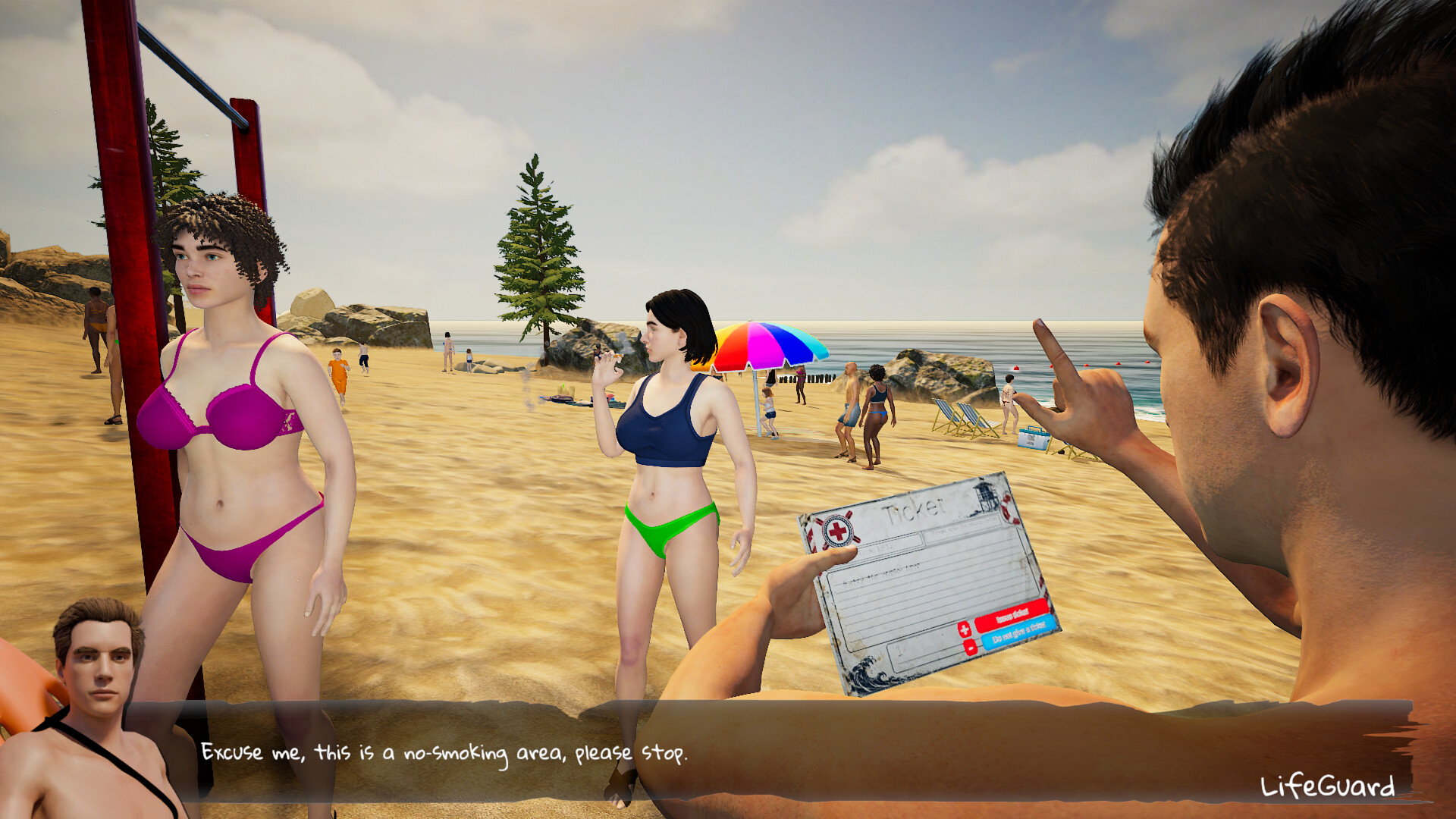
Between dramatic drownings, Lifeguard Simulator is a shore management sim. Beach patrol is how you keep the sand legal, the crowd alive, and HQ satisfied while you stay ready for water emergencies. This guide covers tickets, litter, partygoers, sharks, unattended children, stranded marine animals, jellyfish, metal detector searches, tower surveillance, and radio triage — the daily texture of Early Access shifts.
Pair this page with How to rescue so you know when to abandon a ticket mid-write. Day pacing across the scripted roster lives in the Day walkthrough.
The patrol rhythm
A strong shore loop is predictable on purpose:
- Tower open — Cameras and binoculars first. Mark crowded pockets, illegal vendors, and anything already wrong in the water.
- Sand pass — Walk or ride a quad bike along the beach. Quads win on distance; walking wins when you need fine interaction with litter and NPCs.
- Hotspot linger — Party zones, vendor stalls, and kid-heavy shallows deserve a second look.
- Radio interrupt — HQ calls reorder your queue. Water and wildlife emergencies jump the line.
- Close the books — Finish remaining tickets and litter before the day clock, then refuel and restock.
Think of patrol as filling score between rescues, not instead of them.
Tickets, litter, and illegal vendors
Issuing tickets for littering and recklessness is core busywork with real impact. Approach clearly, complete the citation flow, and move on — do not role-play a five-minute lecture while a swimmer goes under behind you. Litter cleanup often pairs with the same hotspots; clear trash that attracts more rule-breaking.
Illegal vendors add friction and objectives. Shut them down when HQ flags them, but keep situational awareness. Vendor arguments are classic bait for missing a drowning call fifty meters away. If the radio spikes, drop the confrontation and sprint.
Partygoers, kids, and crowd control
Partygoers create noise, debris, and unsafe swimming. Break up the worst clusters, ticket the offenders who cross into recklessness, and watch for people who stumble toward deep water. Music and crowds also mask audio cues — lean harder on tower cameras during peak party hours.
Unattended children near the waterline are high priority even when no formal drowning alert has fired. Escort or resolve the situation before it becomes a full rescue. A calm intervention on the sand is always cheaper than an oxygen race offshore.
Self-defense and light physical tools (including kicking objects or splashing with a water bucket) exist for aggressive or chaotic NPCs. Use them to create space, not to turn the beach into a brawl simulator — HQ still expects a professional shift.
Sharks, seals, jellyfish, and other wildlife
Sharks force a hybrid response: protect swimmers, clear the zone, and be ready to convert the event into a water rescue if someone is already hit or panicking. Do not tunnel on photo ops; move people out of the water first.
Stranded marine animals (such as seals) and jellyfish tasks mix care with hazard control. Catching jellyfish can be an explicit duty — clear the swimming area and complete the interaction prompts. Stranded animals usually want a safe resolution path rather than a rushed shove back into surf. These side objectives are excellent score toppers on quiet minutes and terrible excuses during Code Red.
Metal detector and optional shore toys
The metal detector turns quieter beach stretches into a search mini-loop. Use it when major duties are green and no radio panic is active. Finds are a bonus layer, not a replacement for surveillance. Likewise, achievements and playful interactions are fine after the serious checklist is stable.
Optional tools never outrank a fueled jet ski waiting for the next splash. Keep logistics honest: a lifeguard who spends half the day detecting coins with an empty gas tank fails the next offshore call. Craft priorities are covered on the Vehicles tier list.
Tower surveillance and HQ calls
Your rescue tower is not flavor furniture. Start and mid-shift scans catch drownings earlier than sand-level vision. Rotate cameras across blind corners and the far swimming ropes. When HQ radios a task, classify it instantly:
- Soft shore — tickets, litter, vendors, parties → continue patrol route.
- Wildlife / child safety — elevate priority, still usually on foot or quad.
- Water emergency / Code Red — abort shore flow; execute How to rescue protocols.
Misclassifying a water call as “finish this ticket first” is the most common patrol failure in Early Access.
Scoring mindset for shore work
Efficient lifeguards batch similar tasks: clear one litter cluster, cite the nearby recklessness, then move to the next sector instead of zigzagging the entire beach for single cans. After any rescue, do a short shore recovery pass before returning to the tower so unfinished duties do not pile into a last-minute panic.
For how these duties escalate across days 1–10 and mutate in the day-11 random loop, read the Day walkthrough. New players should still begin with Getting Started. More tutorials sit on the Guides Hub; equipment comparisons on the Vehicles tier list; patch and EA context on the Updates Hub.
Master beach patrol and the sand feels readable. Miss its triage rules and even perfect swimming form will not save a chaotic shift.
Frequently Asked Questions
Quick answers to the most common questions.
Should I finish all tickets before checking the water?
No. Water emergencies and many wildlife or child-safety calls preempt citations. Tickets fill score between crises, not during them.
Is the quad bike required for patrol?
Not required, but it is the best way to cover long sand stretches quickly. Walk when you need precise litter or NPC interactions.
What do I do when a shark appears?
Clear swimmers from the water, manage the threat, and be ready to switch into a full rescue if someone is already in trouble.
When should I use the metal detector?
During quiet windows when HQ duties are under control and no drowning timer is active. It is a bonus loop, not a primary objective.
How often should I return to the tower?
Open the day with a camera sweep, then re-check after major rescues or when radio cues feel unclear. Tower vision catches offshore problems earlier than sand-level sight.