Lifeguard Simulator Lifeguard Certification Exam Guide
Beat the examiner’s brain check, fitness course, and surprise mid-test rescue.
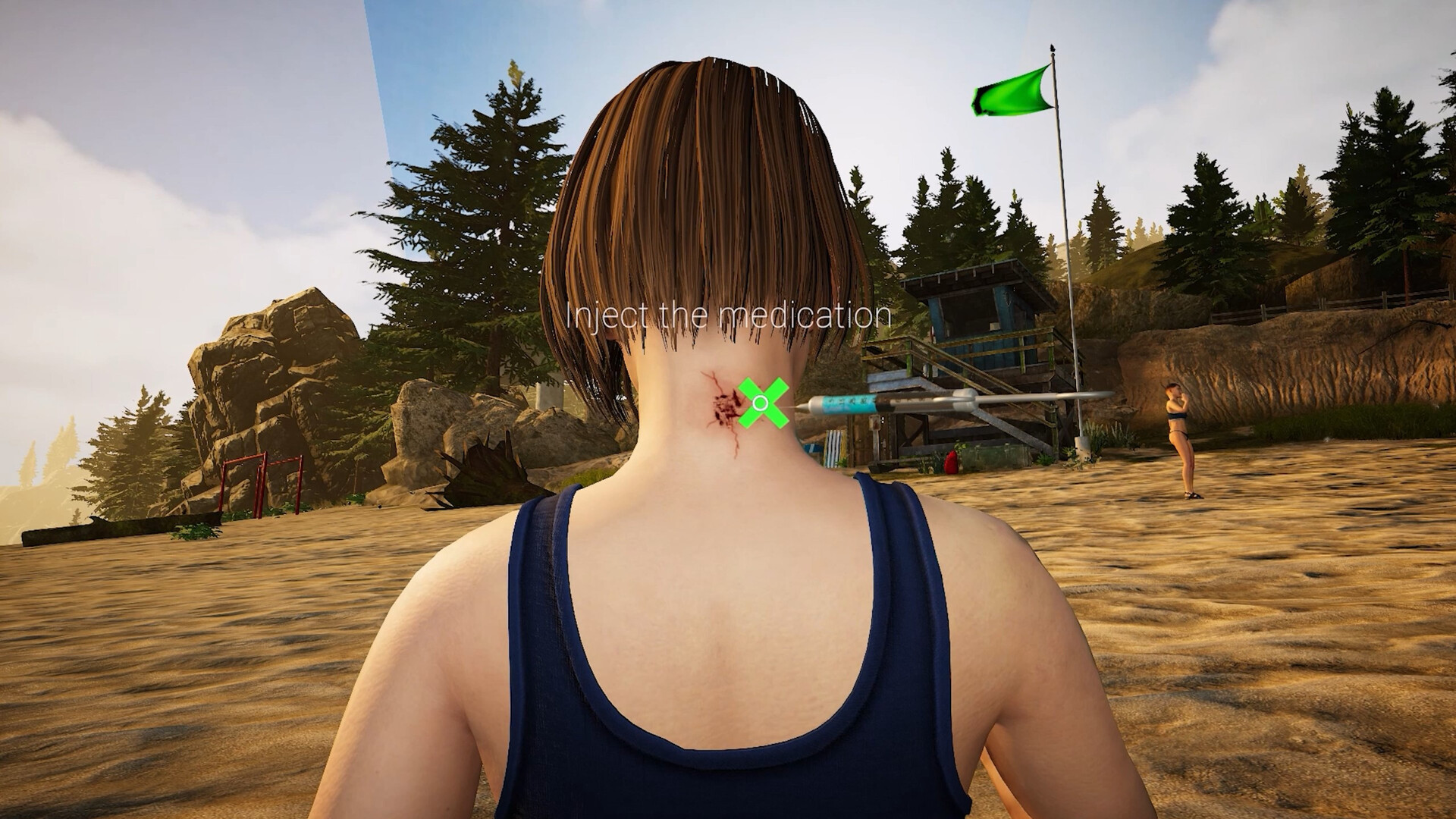
Before you own a full beach shift in Lifeguard Simulator, you prove you belong. The certification exam is the gated opener: an examiner NPC checks your intelligence (written / brain test) first, then your physical fitness, and often throws a live rescue into the middle of the test. Pass, and you unlock the job. Fail a stage, and you are stuck redoing the gate instead of patrolling.
Early Access began on Steam on November 27, 2026 from FreeMind S.A. with PlayWay S.A. as co-publisher. The career after certification is single-player only: roughly ten scripted duty days, then a randomized day-11+ loop, across about twelve months of planned EA. Treat the exam as practice for the same instincts you will need when a swimmer has roughly five minutes without oxygen. If you still need install and tower basics, start with Getting Started; for input binds, open Controls.
Meet the examiner
Find the lifeguard examiner on the beach near the training / shack area — the NPC who talks like a certification officer, not a tourist. Dialogue makes the order explicit: brains before brawn. Do not burn stamina on optional beach pull-up bars for show before you talk to him; the official physical segment comes after the written check, and the examiner will call for pull-ups himself.
Talk to him, accept the exam flow, and stay close to the marked stations. Wandering off for litter tickets or metal detecting mid-exam is how people lose the thread and miss the timed physical pieces.
Phase 1 — Written / intelligence check
The first gate is a theory quiz using an interactive notebook or clipboard. Questions mix serious first-aid knowledge with jokey wrong answers. Expect topics like:
- What to prioritize after you pull an unconscious person to shore (airway / breathing / CPR prompts — not selfies).
- How to handle a panicking drowning victim who tries to pull you under (break free and use a rescue buoy / tube, not a wrestling match).
- Adult CPR ratio: 30 chest compressions to 2 rescue breaths is the answer the game wants.
Read every option. Trap answers are funny on purpose — Instagram selfies, waiting for your favorite song, or engineering-brain mix-ups like confusing CPR with unrelated acronyms. Pick the professional option, confirm, and move on. You only unlock the physical block after the examiner is satisfied that you are not a liability with a clipboard.
Tip: skim How to rescue once before the quiz if CPR and buoy language feels fuzzy. The written section is short, but a wrong click forces a retry mindset that bleeds into the timed course.
Phase 2 — Physical fitness
Pull-ups
The examiner sends you to the pull-up bars. This is a rhythm / mash challenge: tap the prompted key (often Space on keyboard) to climb reps. Watch the feedback meter — early reps feel easy; keep a steady cadence until the UI goes green / satisfied. You do not need infinite reps; stop when the exam accepts the set. Exhausting yourself past green wastes focus before the obstacle run.
Obstacle course
Next is a timed obstacle course on the sand training lane: jumps, barriers, wall or ladder climbs, and sections that need coordinated left/right arm movement (often A / D or stick equivalents on a controller). Treat it as a clean time trial, not parkour freestyle. Reset your camera before the countdown so the first hurdle is centered. Fail a jump, recover forward — standing still while the timer burns is worse than a messy landing.
Some builds also chain a short vehicle check after the foot course: drive a quad / ATV through checkpoints, then a jet ski segment for water handling. Keep throttle smooth; clipping every cone matters more than maximum speed. If ignition or enter/exit prompts confuse you, remap them in Controls before you retry the exam.
Phase 3 — Rescue during the test
The exam’s signature twist: someone goes under while you are still being evaluated. The pass line celebrates lightning-fast reaction and rescuing a person in the middle of the test. When the radio / shout / splash hits:
- Drop the drill — leave the remaining obstacle or vehicle checkpoint.
- Grab the orange buoy / rescue tube from the lifeguard shack if you are not already carrying one.
- Enter the water, dive if the victim is submerged, secure them on the buoy, and tow to shore.
- Follow rescue breath / CPR prompts on the sand until the sequence completes.
Do not treat this as optional flavor. The examiner grades the interrupt. Ignoring the drowning to finish a perfect obstacle time is the wrong priority — the same rule that governs real shifts later. Remember the ~five-minute oxygen window: hesitation on the beach costs more than a slightly messy tow.
For deeper search, craft choice, and Code Red habits after you are certified, keep How to rescue open. Shore multitasking that will fill your days after the badge is covered in Beach patrol.
Tips to pass on the first try
- Order discipline — written → pull-ups → obstacles / vehicles → react to the mid-test save. Do not invent your own sequence.
- Bind comfort first — interact, sprint, dive, enter/exit vehicle, and any QTE keys should feel automatic before you talk to the examiner.
- Buoy before heroics — grab the rescue device when the script allows; swimming empty-handed makes the mid-test save harder.
- Green is enough — stop pull-ups when accepted; save stamina for the course and the rescue.
- Camera and path — line up the obstacle start; look where the next barrier is, not at the timer.
- Water triage forever — the mid-test drowning is training for every later HQ interrupt. Practice dropping shore goals instantly.
What unlocks after you pass
When the examiner congratulates you, the job opens: rescue tower shifts, beach tickets, craft unlocks, and the day structure that runs through Early Access. You are no longer a candidate — you are on the roster for the ten scripted days and, later, the day 11 random objective loop. From here:
- Run a clean first patrol with Getting Started.
- Learn shore score without tunnel vision via Beach patrol.
- Harden water skills in How to rescue.
- Plan escalation with the Day walkthrough.
- Track EA scope on the Early Access overview and browse the full Guides Hub when a new duty appears.
Vehicle priority after the badge is covered on the Vehicles tier list. Official and community doors live on Links.
Certification is short compared with a ten-day EA run, but it teaches the game’s real rule in miniature: prove knowledge, prove fitness, then prove you will abandon the checklist the moment a life is on the clock. Nail that interrupt once under the examiner’s eye, and the rest of the beach makes more sense.
Frequently Asked Questions
Quick answers to the most common questions.
What order is the Lifeguard Simulator certification exam?
Intelligence first (written / brain check with the examiner), then physical fitness (pull-ups and obstacle course, sometimes with vehicle checkpoints), plus a live rescue that can interrupt the test.
What CPR ratio does the written test expect?
Adult CPR is graded as 30 chest compressions to 2 rescue breaths. Avoid joke answers about selfies or waiting for music.
Do I have to rescue someone during the exam?
Yes — a drowning often triggers mid-test. Drop the drill, grab a buoy if needed, save the victim, and finish CPR prompts. Passing dialogue calls out that fast mid-test rescue.
What do I unlock after passing certification?
Full lifeguard duty: tower shifts, patrols, and progression through the ten scripted Early Access days and the later randomized day-11+ loop. The game remains single-player only.
Where should I go after the exam?
Follow Getting Started for the first patrol, Beach patrol for shore duties, How to rescue for water saves, and the Day walkthrough once you optimize across days.